10 Most Popular AI Chatbots and Their Uses
Introduction
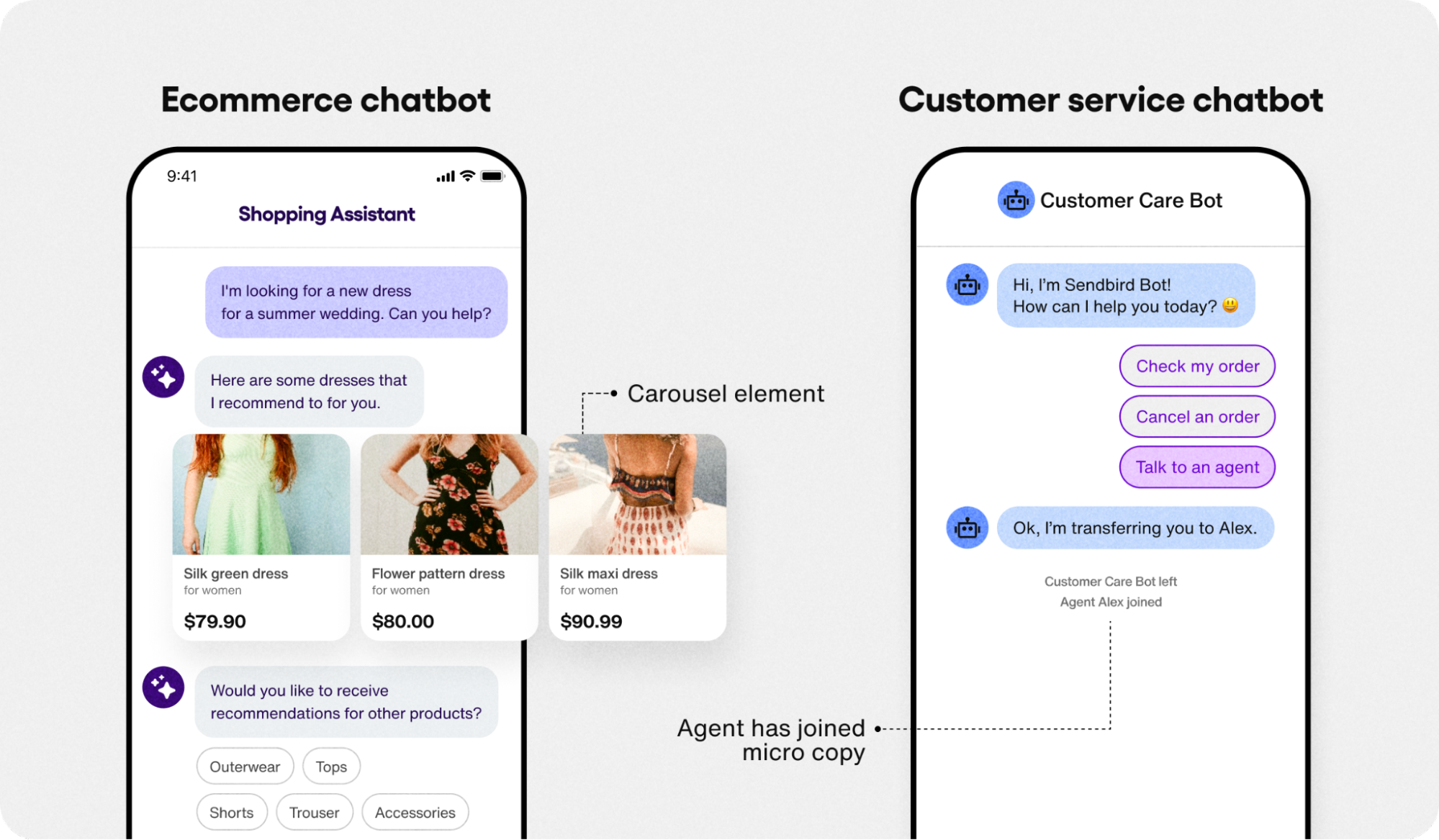
Artificial Intelligence (AI) chatbots have rapidly evolved from simple rule-based systems into highly intelligent conversational agents capable of understanding, reasoning, and generating human-like responses. These chatbots are now widely used across industries such as education, healthcare, business, and entertainment, transforming how people interact with technology.
The increasing popularity of AI chatbots can be attributed to advancements in natural language processing (NLP), machine learning, and large language models (LLMs). Today, chatbots are not only used for answering questions but also for content creation, coding, customer support, and decision-making. As a result, they have become essential tools for individuals and organizations seeking efficiency and innovation.
This article explores ten of the most popular AI chatbots, highlighting their features, capabilities, and real-world applications.
1. ChatGPT

ChatGPT, developed by OpenAI, is one of the most widely used AI chatbots globally. It is powered by advanced language models and is capable of generating human-like responses across a wide range of topics.
Uses
- Content writing and editing
- Coding assistance and debugging
- Academic research and explanations
- Business communication and automation
- Personal productivity support
Key Strengths
ChatGPT is known for its versatility and ability to handle complex queries. It supports multiple use cases, from casual conversations to professional tasks, making it a preferred choice for students, professionals, and businesses.
2. Google Gemini
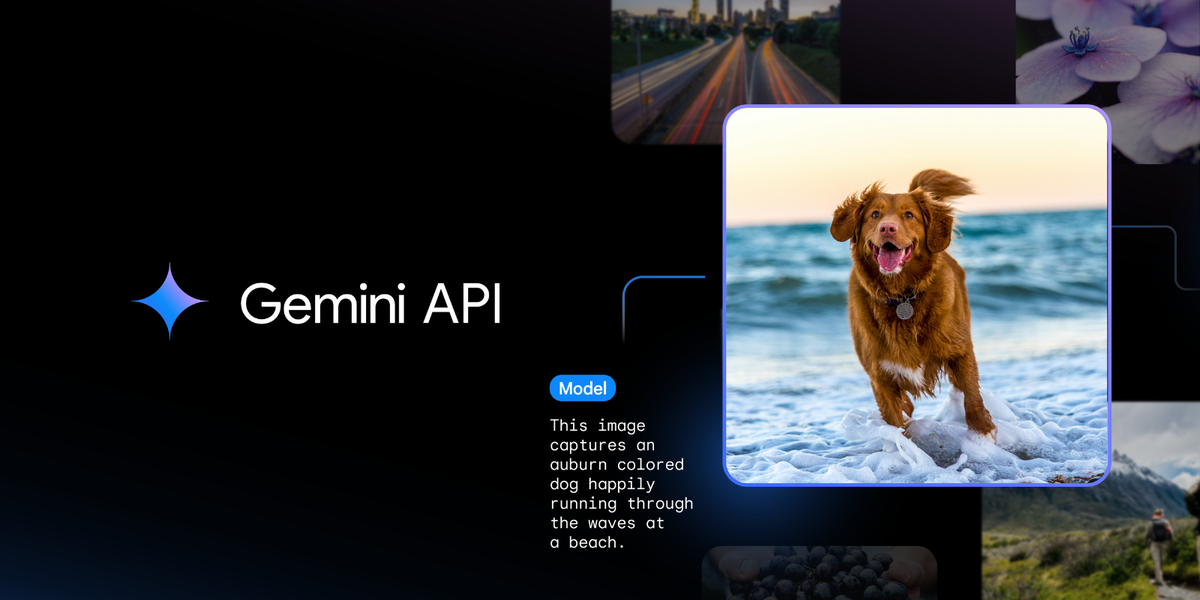
Google Gemini (formerly Bard), developed by Google, is a powerful AI chatbot designed to integrate seamlessly with Google’s ecosystem.
Uses
- Real-time information retrieval
- Integration with Google Docs, Gmail, and Drive
- Research and summarization
- Travel planning and recommendations
Key Strengths
Gemini excels in providing up-to-date information and integrating with productivity tools, making it ideal for users deeply embedded in the Google ecosystem.
3. Microsoft Copilot
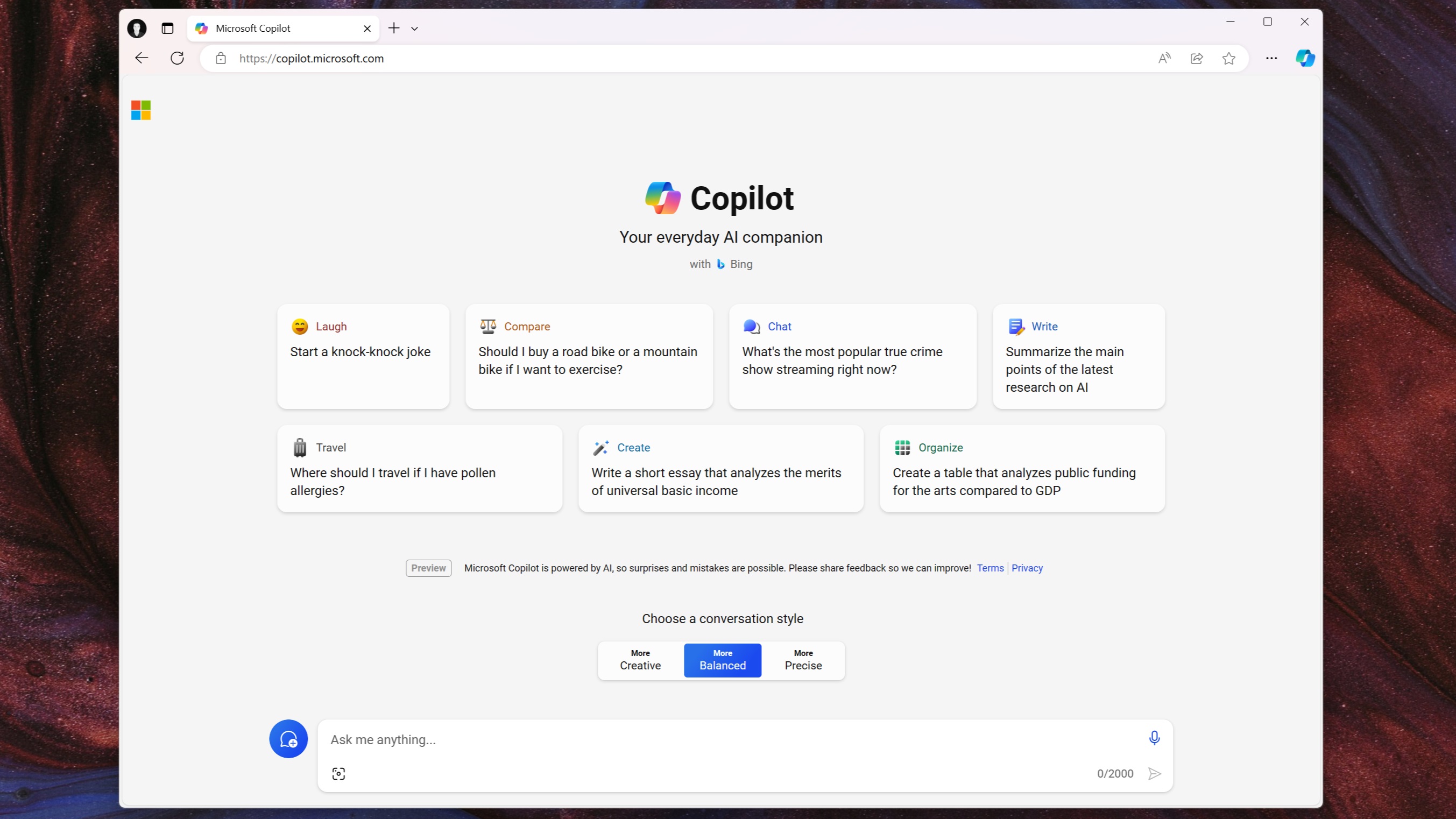
Microsoft Copilot is an AI-powered assistant integrated into Microsoft products such as Word, Excel, and Teams, developed by Microsoft.
Uses
- Document drafting and editing
- Data analysis in Excel
- Meeting summaries in Teams
- Software development assistance
Key Strengths
Its deep integration with Microsoft Office tools makes it highly valuable for workplace productivity and enterprise use.
4. Claude

Claude, developed by Anthropic, is known for its focus on safety, reliability, and long-form content processing.
Uses
- Document analysis and summarization
- Legal and policy writing
- Research assistance
- Ethical AI interactions
Key Strengths
Claude is particularly strong in handling long documents and maintaining context, making it suitable for professional and academic use.
5. Jasper AI
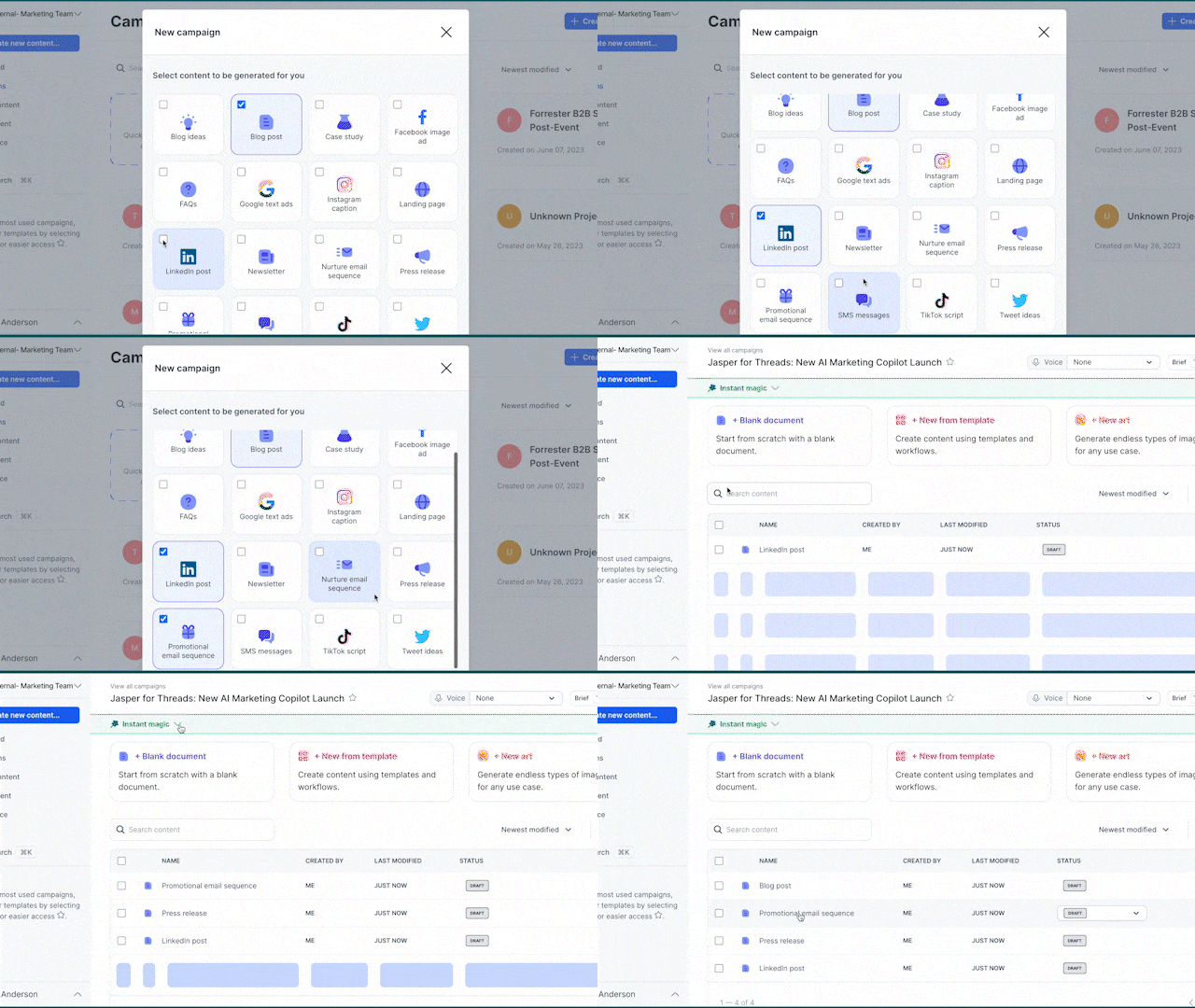
Jasper AI is a specialized chatbot designed for marketing and content creation.
Uses
- Blog writing and SEO content
- Social media content generation
- Email marketing campaigns
- Brand messaging
Key Strengths
Jasper AI is optimized for marketing professionals, offering templates and tools tailored for high-quality content generation.
6. Drift
Drift is a conversational AI chatbot focused on sales and customer engagement.
Uses
- Lead generation
- Customer support
- Sales automation
- Website engagement
Key Strengths
Drift helps businesses convert website visitors into customers through real-time conversations and automation.
7. Replika
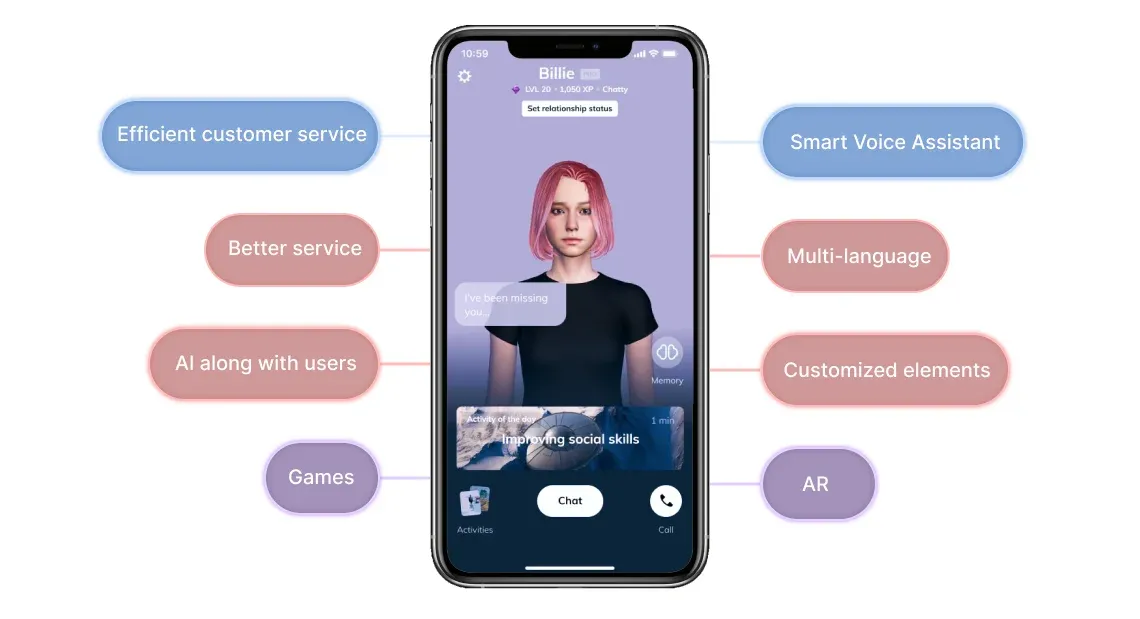
Replika is an AI chatbot designed for personal companionship and emotional support.
Uses
- Mental wellness support
- Casual conversations
- Personal journaling
- Emotional companionship
Key Strengths
Replika focuses on building personal connections with users, making it unique among AI chatbots.
8. Tidio
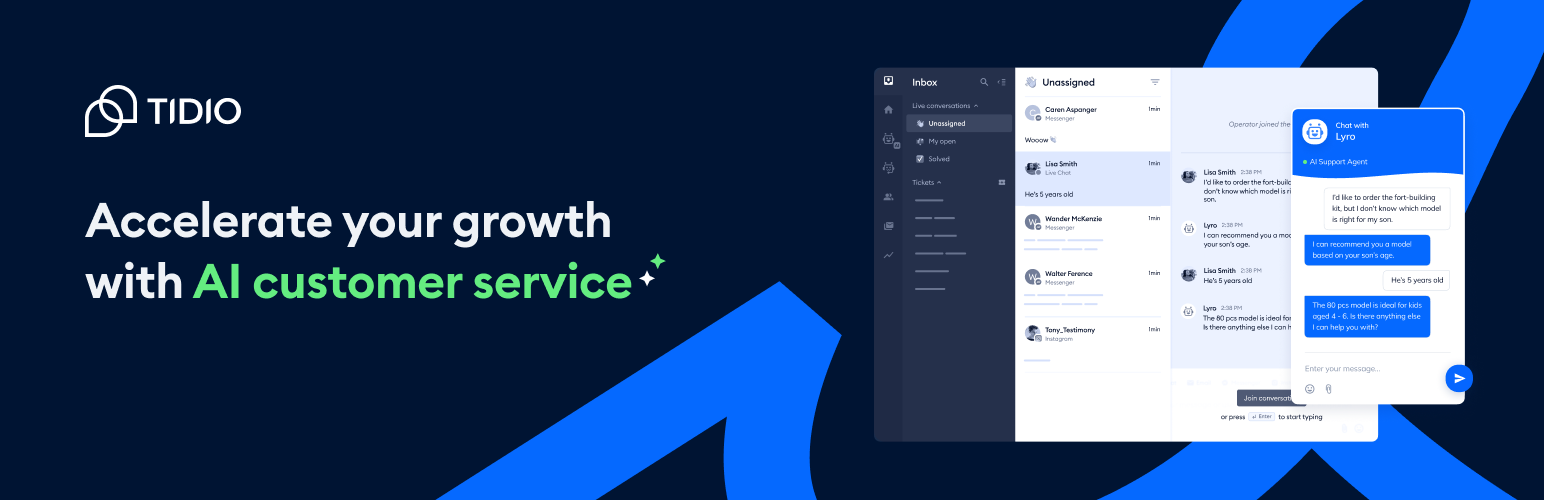
Tidio is a chatbot platform designed for small and medium-sized businesses.
Uses
- Customer service automation
- E-commerce support
- Live chat integration
- Order tracking assistance
Key Strengths
Tidio is easy to implement and cost-effective, making it ideal for growing businesses.
9. Intercom
Intercom provides AI-driven customer communication tools for businesses.
Uses
- Customer onboarding
- Support automation
- User engagement
- Helpdesk integration
Key Strengths
Intercom combines chatbot capabilities with customer relationship management tools for a seamless user experience.
10. Snapchat My AI
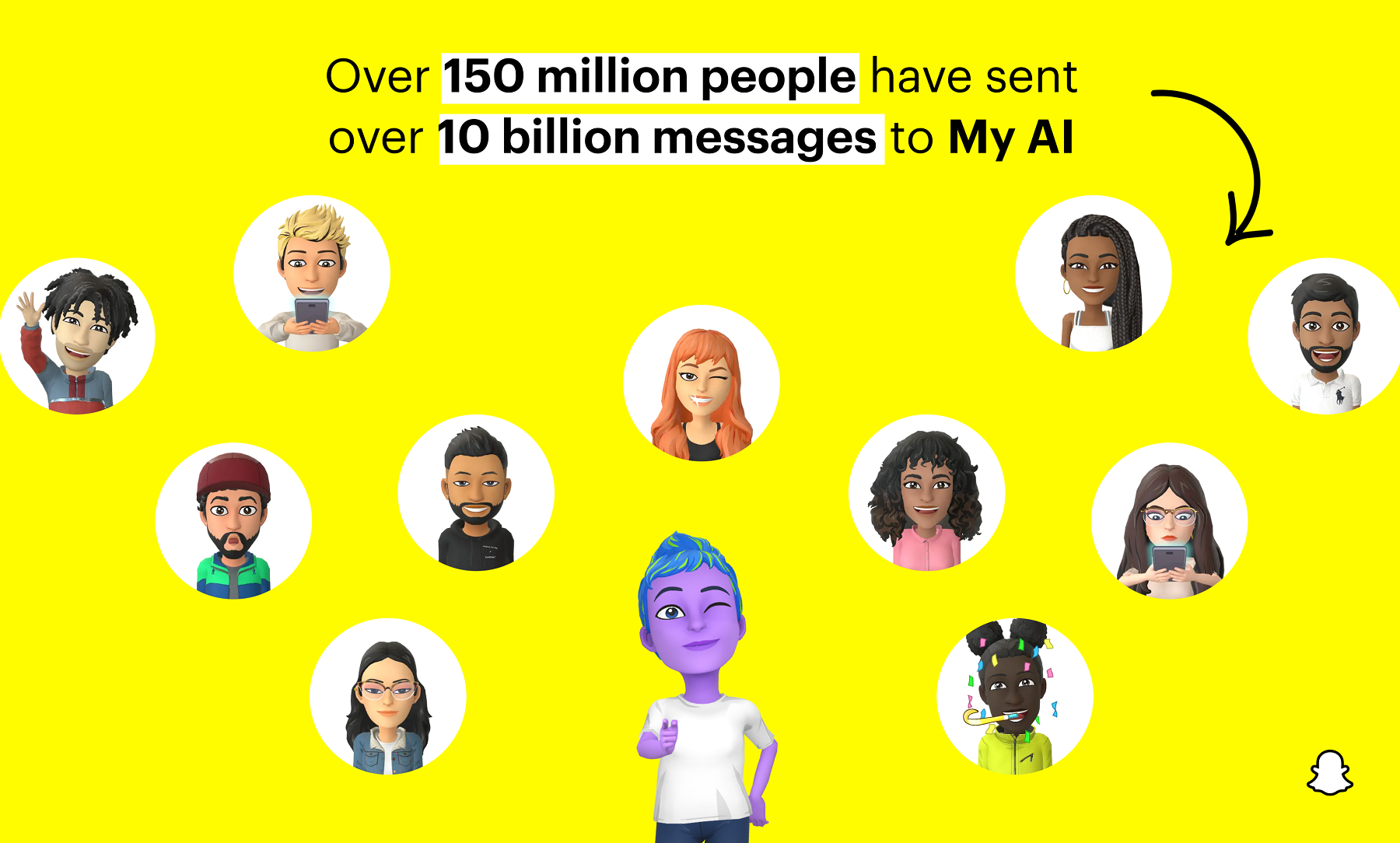
Snapchat My AI is a chatbot integrated into Snapchat, designed for casual interaction and entertainment.
Uses
- Casual conversations
- Recommendations and tips
- Social interaction
- Entertainment
Key Strengths
Its integration into a social media platform makes it highly accessible and engaging for younger users.
Comparative Overview of AI Chatbots
While all these chatbots leverage AI, their primary functions differ significantly. Some, like ChatGPT and Claude, are general-purpose tools, while others such as Jasper AI and Drift are specialized for marketing and business applications.
- General-purpose chatbots: ChatGPT, Gemini, Claude
- Productivity tools: Microsoft Copilot
- Marketing and sales: Jasper AI, Drift
- Customer service: Tidio, Intercom
- Personal use: Replika, Snapchat My AI
This diversity highlights how AI chatbots are tailored to meet specific needs across industries.
Benefits of AI Chatbots
AI chatbots offer numerous advantages that contribute to their growing adoption:
- 24/7 availability: They provide instant responses at any time
- Cost efficiency: Reduce the need for human intervention
- Scalability: Handle multiple interactions simultaneously
- Personalization: Deliver tailored user experiences
- Improved productivity: Automate repetitive tasks
These benefits make chatbots indispensable tools in modern digital environments.
Challenges and Limitations
Despite their advantages, AI chatbots face certain limitations:
- Difficulty understanding complex human emotions
- Risk of inaccurate or biased responses
- Data privacy and security concerns
- Dependence on quality training data
Addressing these challenges is essential for improving chatbot performance and trustworthiness.
The Future of AI Chatbots


The future of AI chatbots is promising, with continuous advancements in AI technology expected to enhance their capabilities. Future chatbots will likely feature:
- More advanced emotional intelligence
- Multimodal interactions (text, voice, and video)
- Deeper integration with daily life and work
- Greater personalization and adaptability
As these developments unfold, AI chatbots will become even more integral to how people interact with technology.
Conclusion
AI chatbots have become powerful tools that are transforming communication, productivity, and customer engagement. From general-purpose assistants like ChatGPT and Gemini to specialized platforms like Jasper AI and Drift, these technologies are reshaping industries and everyday life.
Their ability to automate tasks, provide instant information, and enhance user experiences makes them indispensable in the digital age. As AI continues to evolve, chatbots will play an increasingly important role in shaping the future of human-computer interaction, offering smarter, faster, and more personalized solutions across various domains.